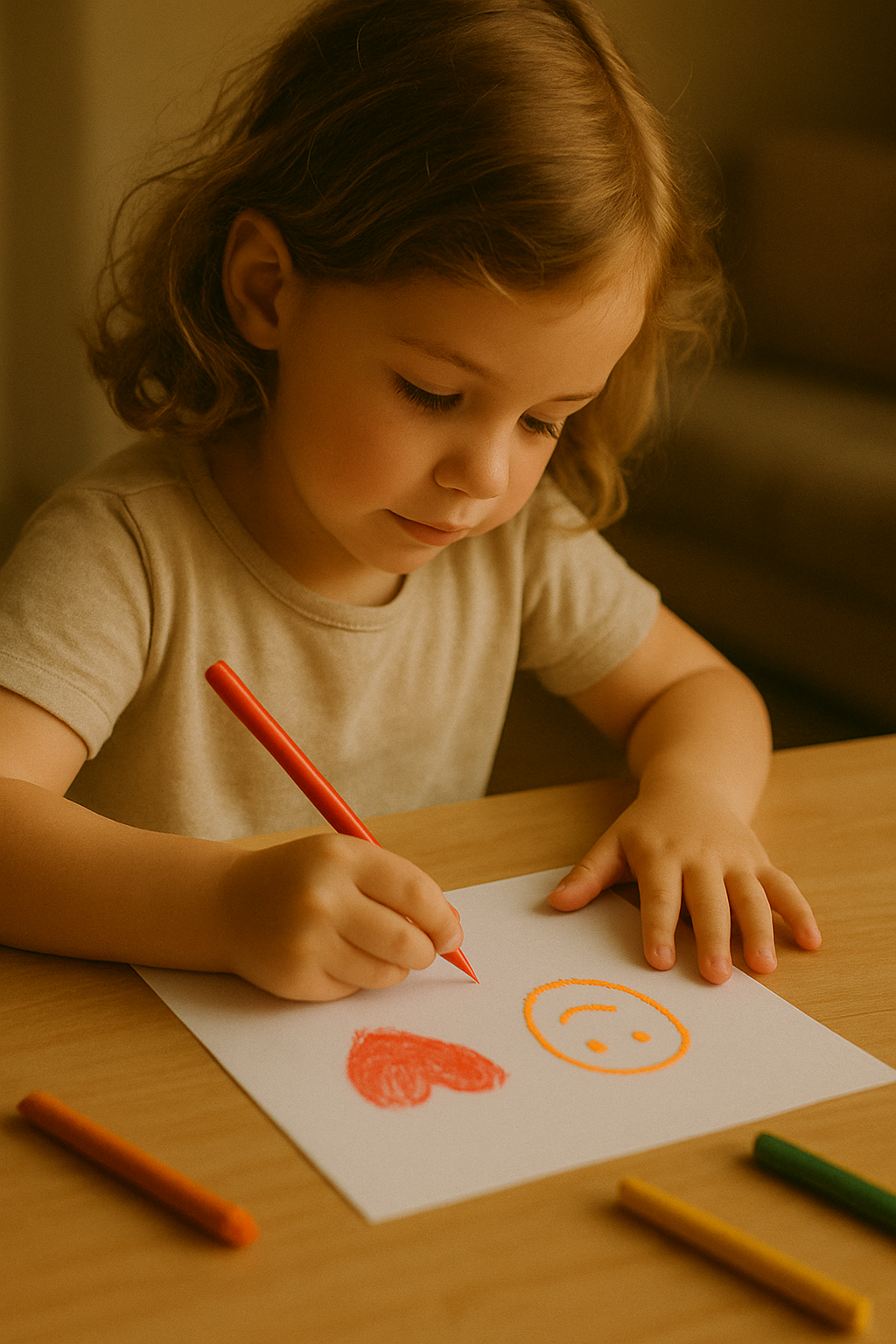
Kindergarten Time: Identity, Emotions & Hormonal Development (3–6 Years)

  1. Consistent routine — Keep regular times for sleep, meals, and play; it reduces stress and supports hormonal balance.
  2. Name the emotions — “You seem sad/angry/happy…” Help your child connect feelings with words.
  3. Daily symbolic play — Drawing, pretend play, building; it’s how children naturally process emotions.
  4. Outdoor movement — 60–90 minutes a day; improves sleep, appetite, and cortisol–melatonin balance.
  5. Simple, colorful plate — Include proteins, vegetables/fruits, and healthy fats; offer water with every meal.
  6. Sleep hygiene — 10–13 hours per 24 hours; no screens before bedtime, use warm light, repeat a calm bedtime ritual.
  7. Gentle, consistent limits — Few clear rules; briefly explain “why,” then redirect to play.

✨ Between ages 3 and 6, children begin to shape their identity, learn to name emotions, and experience small hormonal bursts linked to growth and sleep rhythms. These early years lay the foundation for emotional intelligence and balanced growth.

Discover more in Chapter 3: Kindergarten Time: Identity, Emotions, and Hormonal Development (3 – 6 years) from the Lumora-Raio Hormonal Health Guide.


Similar Posts

  • Tip #4: The Wings of Knowledge (6–10 Years)

    Hormonal Harmony in the Making Between the ages of 6 and 10, a child’s hormonal world slowly awakens — subtly, quietly, but powerfully.This phase is not yet puberty, but it sets the hormonal tone for how smoothly puberty will unfold later. At this stage, the child develops: These years are ideal for supporting the child’s…

  • “My AMH is low. Can I still become pregnant?”

    What anti-Müllerian hormone really tells us about ovarian reserve, fertility and reproductive planning An AMH result can feel like a countdown. A low number may cause fear; a high one may bring relief. Neither reaction tells the whole story. Anti-Müllerian hormone (AMH) is a useful test in the right situation. But it is not an…

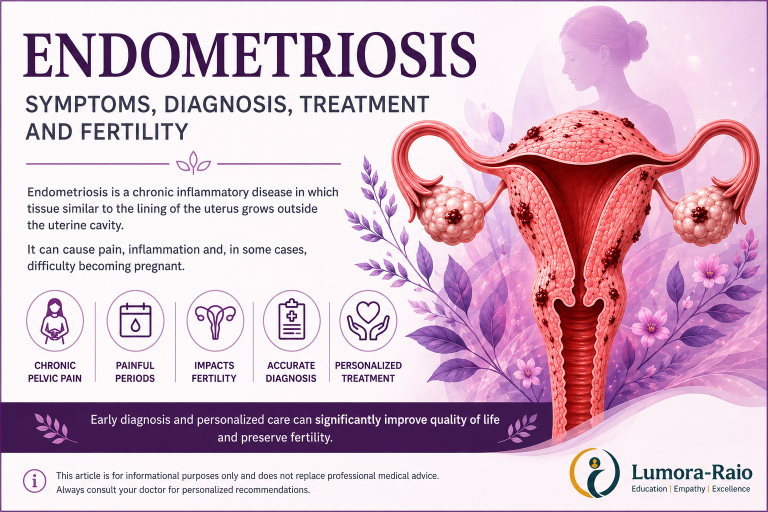
  • Endometriosis: Symptoms, Diagnosis, Treatment & Fertility

    Endometriosis is a chronic inflammatory gynaecological disease characterised by the presence of endometrial-like tissue outside the uterus. Unlike the endometrium, which normally lines the uterine cavity, endometriosis lesions may develop on the pelvic peritoneum, ovaries, uterosacral ligaments, fallopian tubes, bladder, bowel and, more rarely, outside the pelvis, including the diaphragm and chest. [1–4] The disease…

  • Lumora-Raio Tip #1: Your Hormonal Life Begins Before Birth

    From the very first weeks in the womb, your hormonal foundation is being built.The stress your mother felt, the food she ate, even the sounds and emotions surrounding her — all subtly shaped your endocrine blueprint. Modern research shows that hormonal balance doesn’t begin at puberty; it begins before you take your first breath.Understanding this…

  • HPV

    🇫🇷 HPV expliqué simplement Transmission, protection et prévention expliquées clairement. ▶ Voir la vidéo 🇬🇧 HPV explained simply Clear explanation of transmission, protection and prevention. ▶️ Watch the video 🇪🇸 HPV explicado de forma simple Transmisión, protección y prevención explicadas claramente. 🇷🇴 HPV explicat simplu Transmitere, protecție și prevenție explicate clar. ▶️ Urmărește videoclipul Bibliographie…

  • Lumora-Raio Tip #2: First Roots

    Between birth and age three, your hormonal language is learning its first words — safety, rhythm, and trust. Oxytocin, cortisol, and melatonin shape how the body learns to respond to stress, love, and sleep. What feels like comfort and care is, in fact, hormonal programming for life. 🌿 Every calm heartbeat, every gentle voice, every…